

Stepping back into the dating world after 50 is a unique experience. Unlike your younger years, when you might have been focused on building a career or starting a family, this chapter of your life is often about finding a partner who complements the established life you already lead. You likely have a clearer sense of your values, your boundaries, and how you want to spend your time. However, this clarity also brings a specific challenge: how do you align your world with someone else’s? Understanding dating after 50 relationship expectations is crucial because, at this stage, time feels more precious, and most people are looking to avoid unnecessary complications.
One of the most important things to remember is that having relationship goals after 50 doesn't mean you need to have a rigid checklist. Instead, it’s about understanding the general direction of your life. Are you looking for someone to travel the world with during retirement, or are you seeking a quiet companionship that allows you to maintain your own space? There is a significant difference between seeking a serious relationship after 50 and demanding a lifelong commitment on the third date. The goal is to identify compatibility early enough to ensure you aren't heading in completely different directions, without the pressure of an "all or nothing" ultimatum.
"At 50, you aren't just dating a person; you are dating their history, their family commitments, and their vision for a future they’ve likely been planning for decades."
In Australia, many people over 50 find themselves in the "sandwich generation," balancing the needs of ageing parents with the support of adult children or even grandchildren. These factors heavily influence what someone can offer in a relationship. If you are browsing our Dating over 50 hub, you'll see that the diversity of lifestyles is vast. Some are ready to sell the family home in the suburbs of Melbourne or Sydney to travel as "grey nomads," while others are deeply rooted in their local community and have no intention of moving. Establishing these baseline expectations early on helps prevent heartache down the track.
How to talk about what you both want naturally
Talking about the future when dating can sometimes feel like a daunting task. You might worry that bringing up long-term plans too early will scare someone off, or conversely, you might fear that if you don’t ask, you’ll waste months with someone who doesn’t share your vision. The key is to shift the conversation from an "interview" style to a natural exchange of values. Instead of interrogating your date, try sharing your own perspective first. This creates a safe space for them to be honest about their own situation without feeling defensive.
According to Relationships Australia, starting a new relationship involves a balance of self-awareness and curiosity about the other person. It is important to be clear about your own non-negotiables before you start asking others about theirs. Are you open to marriage again, or do you prefer the idea of "Living Apart Together" (LAT)—a trend where couples remain in a committed relationship but maintain separate households? This is a very common goal for many Australians over 50 who value their independence and their established routines.
- Share, don't just ask: Instead of asking "Where do you see this going?", try saying "I've reached a point where I'm really looking for long-term companionship, but I also value my Tuesday nights with my bowls club/book group."
- Observe the "unsure" phase: It is perfectly normal for someone to be unsure early on. They are still getting to know you. Give the relationship room to breathe while keeping an eye on the "big picture" goals.
- Be honest about lifestyle: If you plan to retire to the coast in two years, mention it. It’s better to know now if they are committed to staying in the city for their career.
When you are navigating first dates after 50, the focus should be on building a connection. However, as the second or third date rolls around, you can start using more nuanced questions. These help you understand their mindset without making the evening feel like a legal deposition. Consider these practical examples to keep the conversation flowing naturally:
Instead of: "Are you looking for marriage?"
Try: "What would a good relationship look like for you at this stage of your life?"
Instead of: "Do you have a lot of baggage with your kids?"
Try: "How much of your time is currently focused on family commitments? I’m curious how you balance that with your social life."
Warning: Be careful not to mistake "flexibility" for "lack of interest." Some people genuinely don't have a set plan and are happy to build one with the right partner, while others have a set plan they expect a partner to simply fit into.
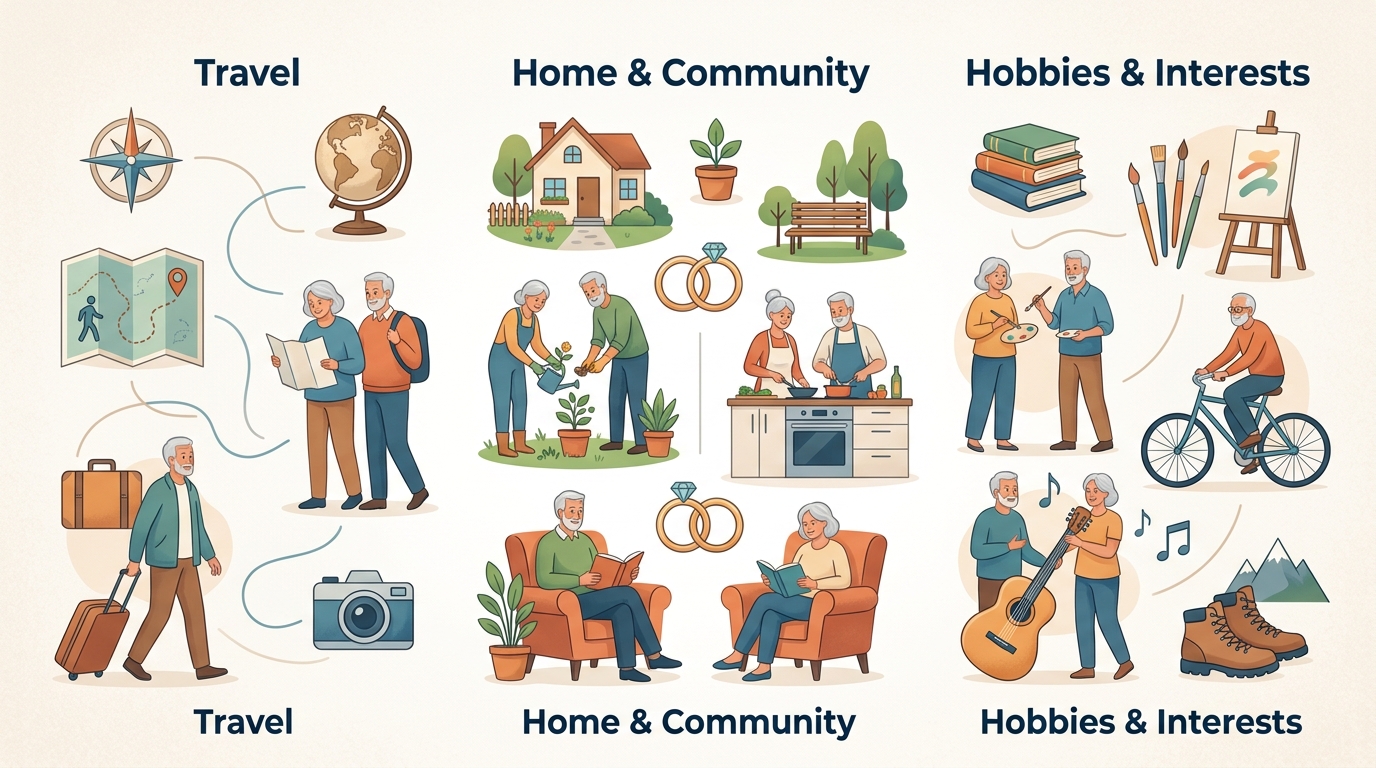
Lifestyle questions that matter as a relationship develops
As a relationship progresses from the initial spark to something more substantial, practical compatibility becomes the "glue" that holds everything together. It’s one thing to enjoy a nice dinner at a bistro in Adelaide or a walk along the Swan River in Perth, but it’s another to agree on how you will spend the next twenty years. This is where you need to look at specific lifestyle markers. For many, relationship goals after 50 revolve around the freedom of retirement and how that time is shared.
A helpful resource is the guide from Relationships Australia on what you want from a new relationship. It highlights that assumptions are the biggest hurdle in new partnerships. Never assume that because someone is "your age," they have the same financial goals or family boundaries. For instance, travel is a major point of contention for many couples. One person may want to backpack through South East Asia, while the other only wants luxury cruises or domestic trips in a caravan. Talking about these preferences early prevents frustration later.
Consider the following areas for deeper exploration as you get to know each other:
- Work and Retirement: Do they plan to work until they are 70? Or are they counting down the days until they can stop? If your lifestyles are out of sync regarding leisure time, it can create friction.
- Living Arrangements: Australians often have strong ties to their homes. Try asking: "Do you see yourself staying where you are long term, or are you fairly flexible about where you live?" This is softer than asking if they would move for a partner.
- Financial Independence: While you don't need to share bank statements on date five, you should discuss lifestyle costs. "When it comes to travel or dining out, do you prefer high-end experiences, or are you more of a budget-conscious adventurer?"
- Independence vs. Togetherness: Some people want a partner who is with them 24/7, while others value a significant amount of "me time." Discussing this early helps set expectations for your weekly routine.
If you are finding that your goals are slightly different, remember that many things can be negotiated. You might not need to live together to have a fulfilling, committed relationship. In fact, for those dating over 60, independence is often one of the most guarded assets. However, if your core values—such as where you want to live or how much time you spend with family—are fundamentally at odds, it may be a sign of genuine incompatibility.
When meeting new people over 50, keep an open mind. Your own goals might even change as you meet someone who introduces you to a new way of living. Perhaps you never thought about moving to the country until you met someone with a beautiful property in the Hunter Valley. The key is to keep the lines of communication open, honest, and respectful.
Ultimately, talking about the future after 50 isn't about deciding the next thirty years of your life in a single afternoon. It’s about a gradual unfolding of two lives to see if they can walk the same path. By focusing on shared values and being honest about your lifestyle needs, you can build a relationship that isn't just about "finding someone," but about finding the right life to share together. Enjoy the journey of discovery, and don't be afraid to ask the questions that matter to your future happiness.