

If you are navigating the dating world in your 40s while raising children, you already know that your "getting to know someone" phase looks very different than it did in your 20s. Back then, a spontaneous mid-week dinner or a last-minute weekend away was easy. Now, your life is a beautifully complex puzzle of school runs, Saturday morning sport, and grocery lists. However, reaching your 40s with a family doesn't mean your personal life has to go on permanent hiatus. It simply means your approach to a new relationship requires more intentionality and a healthy dose of realism.
Entering the dating scene again, perhaps after a long-term relationship has ended, can feel like stepping into a different world. Whether you are navigating this after a divorce, a separation, or as a widowed parent, the emotional stakes often feel higher because you aren't just protecting your own heart—you are protecting your children's stability too. You might find that dating again in your 40s after a long-term relationship forces you to redefine what you actually want from a partner, moving away from superficial traits and focusing more on shared values and lifestyle compatibility.
Dating when your life already includes children
One of the most important realisations you will have is that dating as a parent is not about finding someone to "fill a gap" in the family, but about finding someone who complements your existing life. Your children are your priority, but you are also an individual with needs for companionship and intimacy. The key is balance. You don't need to feel guilty for wanting an adult life, but you do need to be practical about how much of yourself you can give to a new person right away.
In your 40s, changing priorities and expectations often lead to a more "cards on the table" approach. You don't have time for games, and neither does a potential partner who likely has their own career and family commitments. Being honest early on about the role your children play isn't just about transparency; it’s a filter. If a potential partner is uncomfortable with the fact that your Saturday nights are often spent on the couch with a teenager watching movies or that your phone stays on in case of emergencies, they probably aren't the right fit for your life.
"A person who truly values you will respect the boundaries of your parenting role; they will see your commitment to your children as a strength, not an inconvenience."
Safety is another critical layer when you have children. In the era of digital profiles, protecting your family’s privacy is paramount. When you are using online dating apps, avoid sharing identifying details too soon. This includes:
- Using photos where your children’s faces are clearly visible.
- Mentioning the specific school your children attend.
- Sharing their full names or specific routines (like which park you go to every Sunday at 10 am).
- Giving out your home address before you have established significant trust.
Think of it as layers of an onion. A new match gets to know you first. As trust builds over weeks or months, they learn more about your family life. Only when a relationship shows true stability should the inner circle—your home and your children—be considered.
When and how a new relationship can gradually meet family life
There is often a lot of pressure to find the "perfect" time to introduce a partner to your children. You might hear advice about waiting three months, six months, or even a year. In reality, there is no universal number of weeks that dictates when it’s right. Every family dynamic is unique. Instead of watching the calendar, watch the stability of the relationship. Are you and your partner on the same page? Do you see a long-term future? If the answer is yes, then you can begin considering an introduction.
It is helpful to remember that children may not emotionally move on at the same pace as you. While you might feel revitalised by a new connection, your children might still be processing the changes in their family structure. According to advice from Relationships Australia NSW, taking a slow and steady approach is vital because children need time to adjust to the idea of a parent being with someone new without feeling like their own place in your life is threatened.
When you do decide to introduce them, keep it low-pressure. A casual meeting at a park or a quick coffee where the children have something else to focus on—like a playground or a dog—works much better than a formal sit-down dinner. You want to avoid presenting a new partner as a "replacement parent." Instead, let them be another positive adult in the children's lives. It’s also perfectly normal if your children are quiet, unsure, or even a bit protective of you at first. They are allowed to have their own feelings about the change, and those feelings shouldn't be dismissed or rushed.
Warning: Avoid asking your children to keep your new relationship a secret from your ex-partner. This places a heavy emotional burden on them and can create unnecessary loyalty conflicts. Similarly, even if co-parenting is difficult, avoid criticising the other parent in front of your children or your new partner.
For more detailed support on managing these shifts, you can explore the dating over 40 hub, which covers a variety of scenarios for singles re-entering the dating pool. The goal is to integrate your new partner into your life, not to "insert" them into the family unit as if they were always there. This gradual blending allows everyone to find their new rhythm without feeling forced.
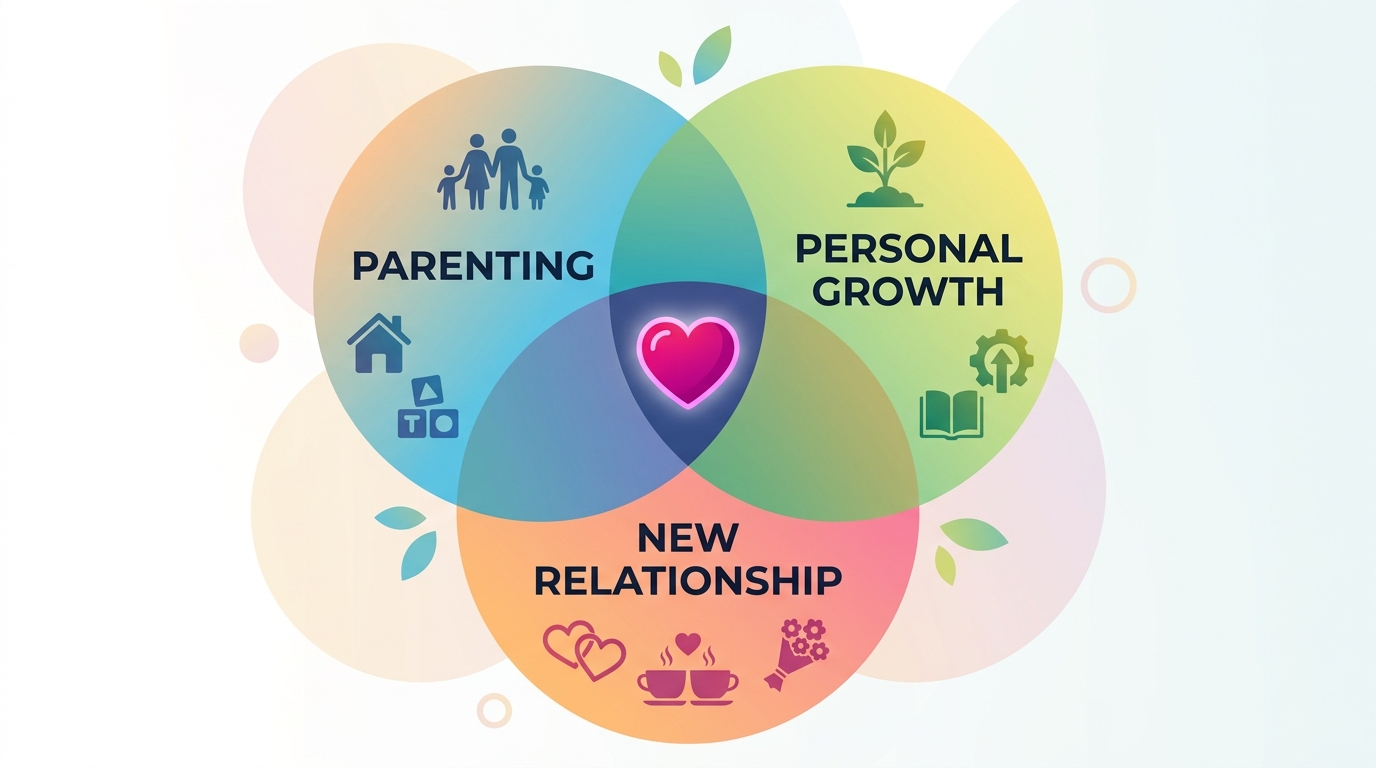
Creating space for both your children and your relationship
One of the biggest hurdles you’ll face is the sheer logistics of it all. Between school holidays, extracurricular activities, and perhaps a co-parenting schedule, finding a window for a date can feel like a feat of engineering. This is where making time for dating in your 40s becomes about quality over quantity. Being realistic about your availability is far better than trying to appear completely flexible and then having to cancel dates at the last minute because of a sick child or a school project.
Consider these practical ways to manage the balance:
- Clear Scheduling: If you have your children on a fortnightly roster, plan your primary "adult-only" dates for the weekends they are with their other parent. This allows you to be fully present for your partner without checking your watch.
- The "Slow Blend": Once the relationship is established, you might start with occasional shared family activities—like a BBQ or a trip to the beach—while still maintaining dedicated one-on-one "date nights" just for the two of you.
- Protecting One-on-One Time: It is crucial to maintain your individual relationship with your children. They need to know that even though there is someone new, your bond with them hasn't changed. Don't let every weekend become a "group activity" once you have introduced a partner.
If you are dating another parent, the complexity doubles, but so does the empathy. They will understand why you can't text back for four hours during a birthday party or why a date needs to end by 9 pm on a school night. This shared understanding can actually create a very strong foundation for a relationship.
As things become more serious, you might find yourselves discussing the future of a blended family. This is a significant step that requires patience. Resources from Relationships Australia suggest that realistic expectations are key—children should not be expected to immediately bond with or even like a new partner. Relationships take time to grow organically, and forcing a "happy family" image too soon can backfire.
Ultimately, a healthy relationship in your 40s should fit alongside your family life rather than competing with it. It’s about finding a partner who understands that while they are a vital part of your world, they are part of an already established ecosystem. By being honest about your boundaries, protecting your children's emotional well-being, and allowing the relationship to develop at its own pace, you can find a balance that works for everyone involved. You aren't choosing between being a parent and being a partner; you are simply expanding the circle of people who bring joy and support into your life.